
A modular wastewater treatment system for coffee farms
Based on aerobic vermifiltration, designed for on-site operation and real farm conditions.
A modular wastewater treatment system for coffee farms
Based on aerobic vermifiltration, designed for on-site operation and real farm conditions.
What BioBrew does on the farm
Treats coffee wastewater and pulp directly at source
BioBrew treats coffee processing waste directly at farm level.
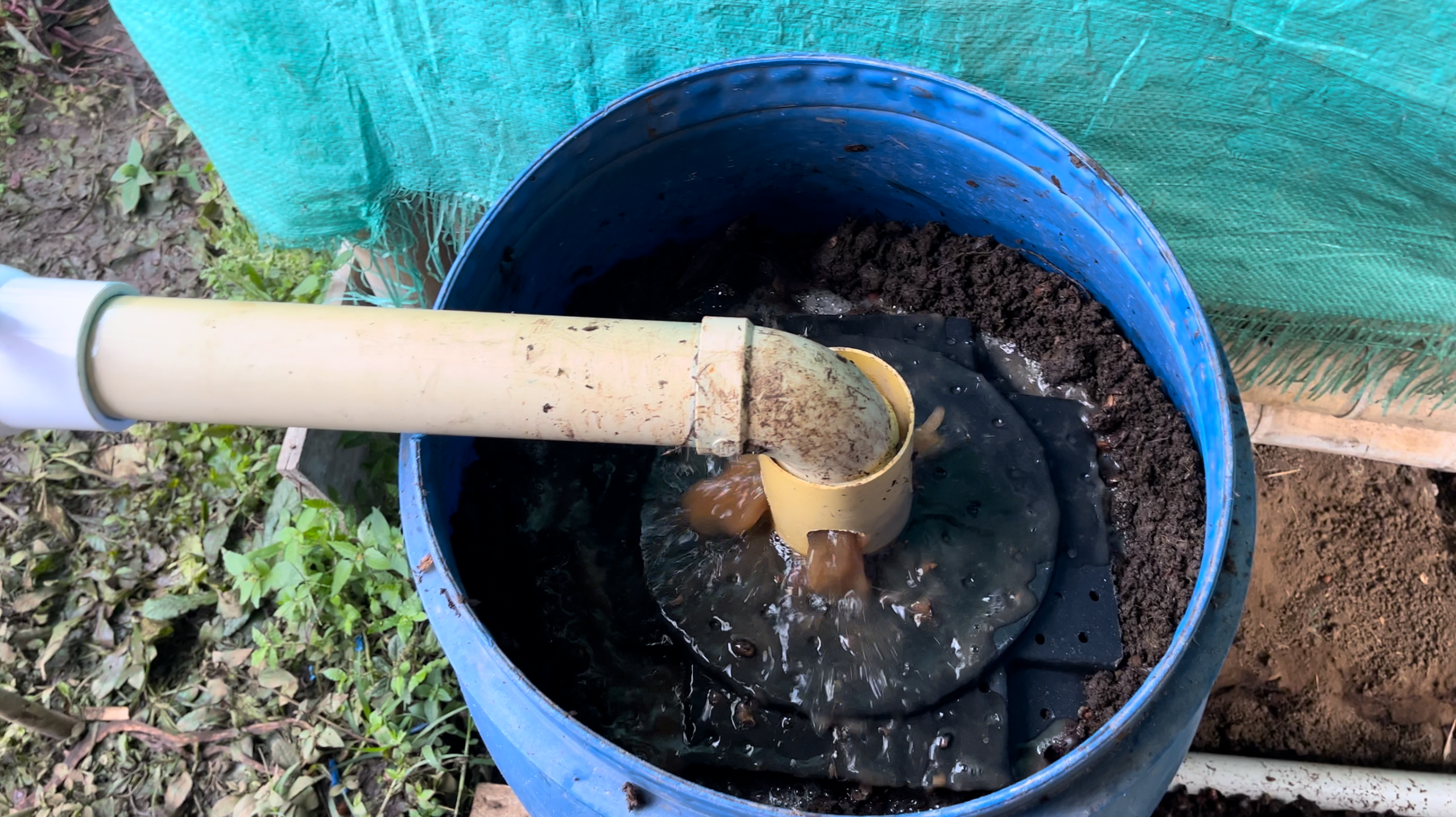
Fermentation wastewater flows through a series of low-energy biological filters, where organic solids are retained and broken down, and acidic effluent is gradually stabilised.
At the same time, coffee pulp is composted within the system, turning waste into soil-enriching material instead of pollution.
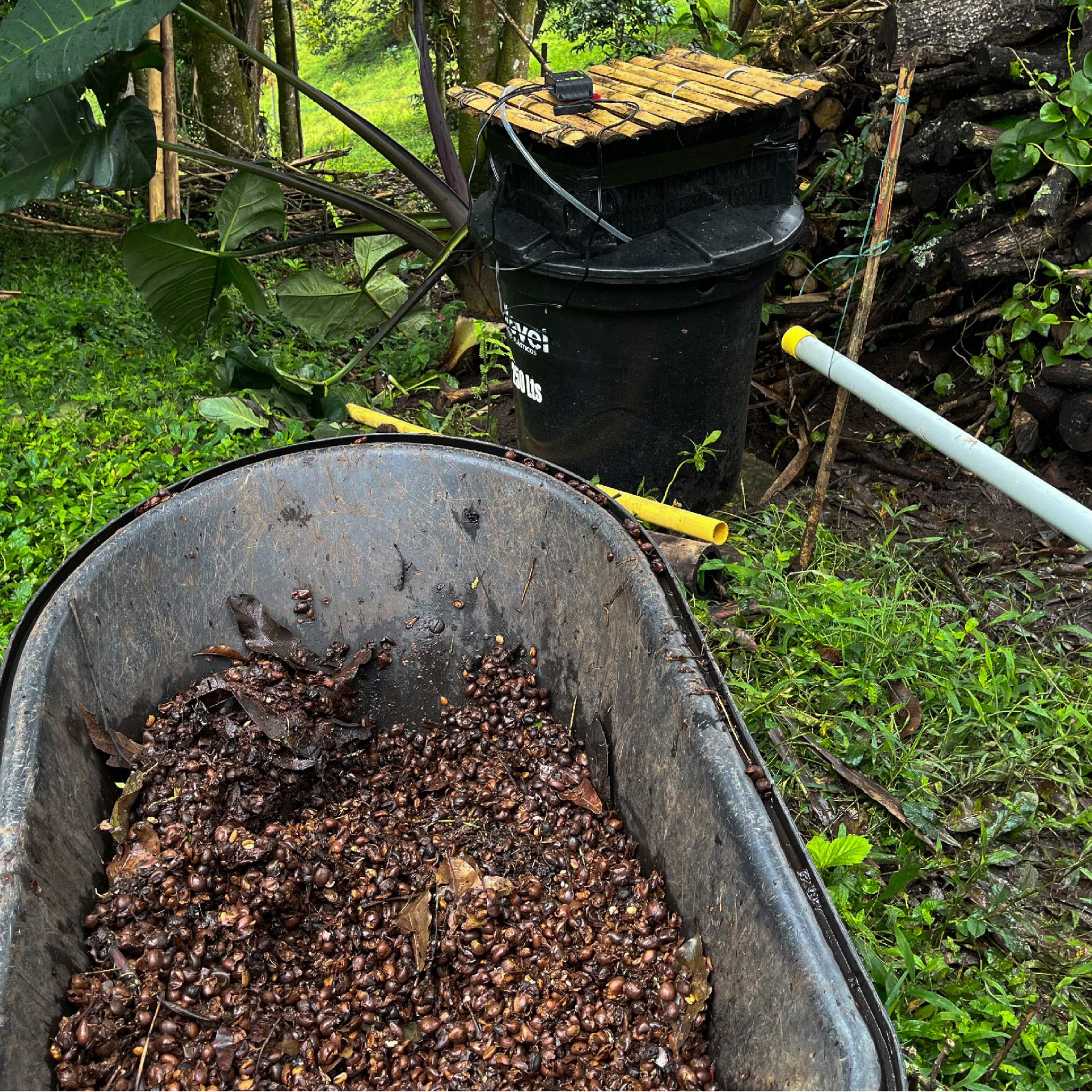
BioBrew filter tank operating on a small coffee farm in Colombia, treating fermentation wastewater on site.
What BioBrew does on the farm
Treats coffee wastewater and pulp directly at source
BioBrew treats coffee processing waste directly at farm level.
Fermentation wastewater flows through a series of low-energy biological filters, where organic solids are retained and broken down, and acidic effluent is gradually stabilised.
At the same time, coffee pulp is composted within the system, turning waste into soil-enriching material instead of pollution.
How the system works
A modular, gravity-fed vermifiltration process
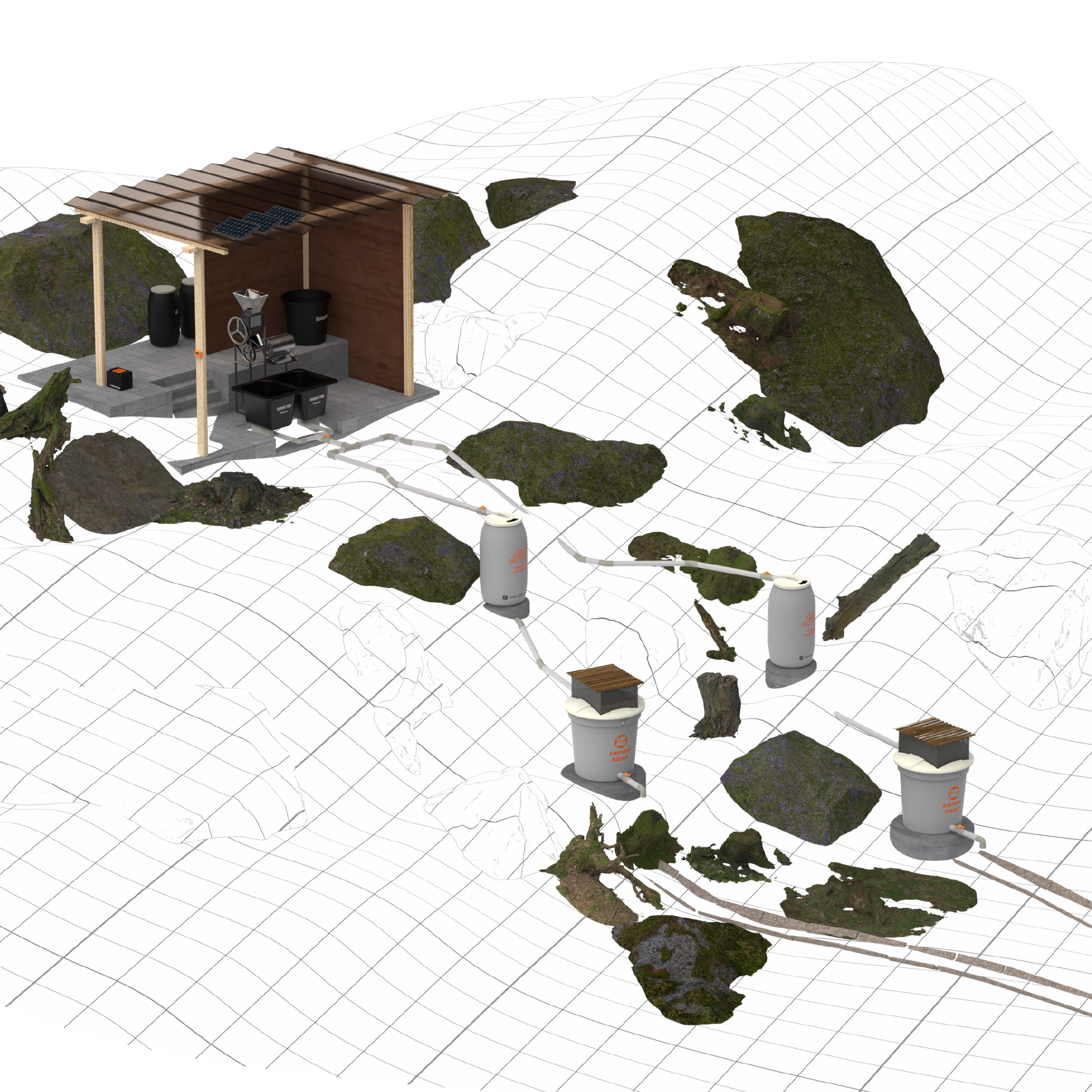
BioBrew Field uses a staged vermifiltration process to stabilise coffee processing wastewater and compost pulp simultaneously.
Designed around gravity flow and biological treatment, the system minimises energy use, maintenance, and operational complexity—addressing the realities of farm-level infrastructure.
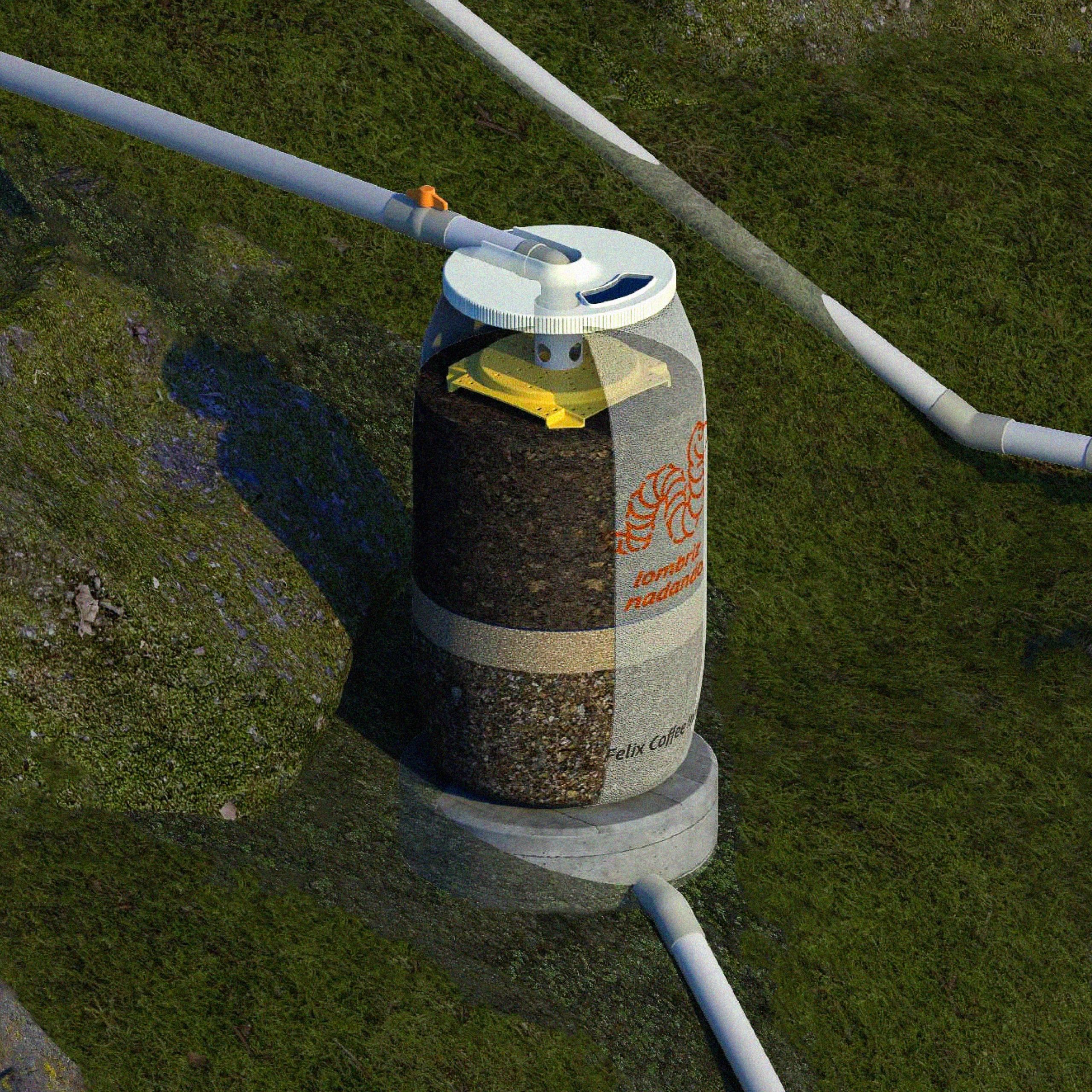
Tanque Tina
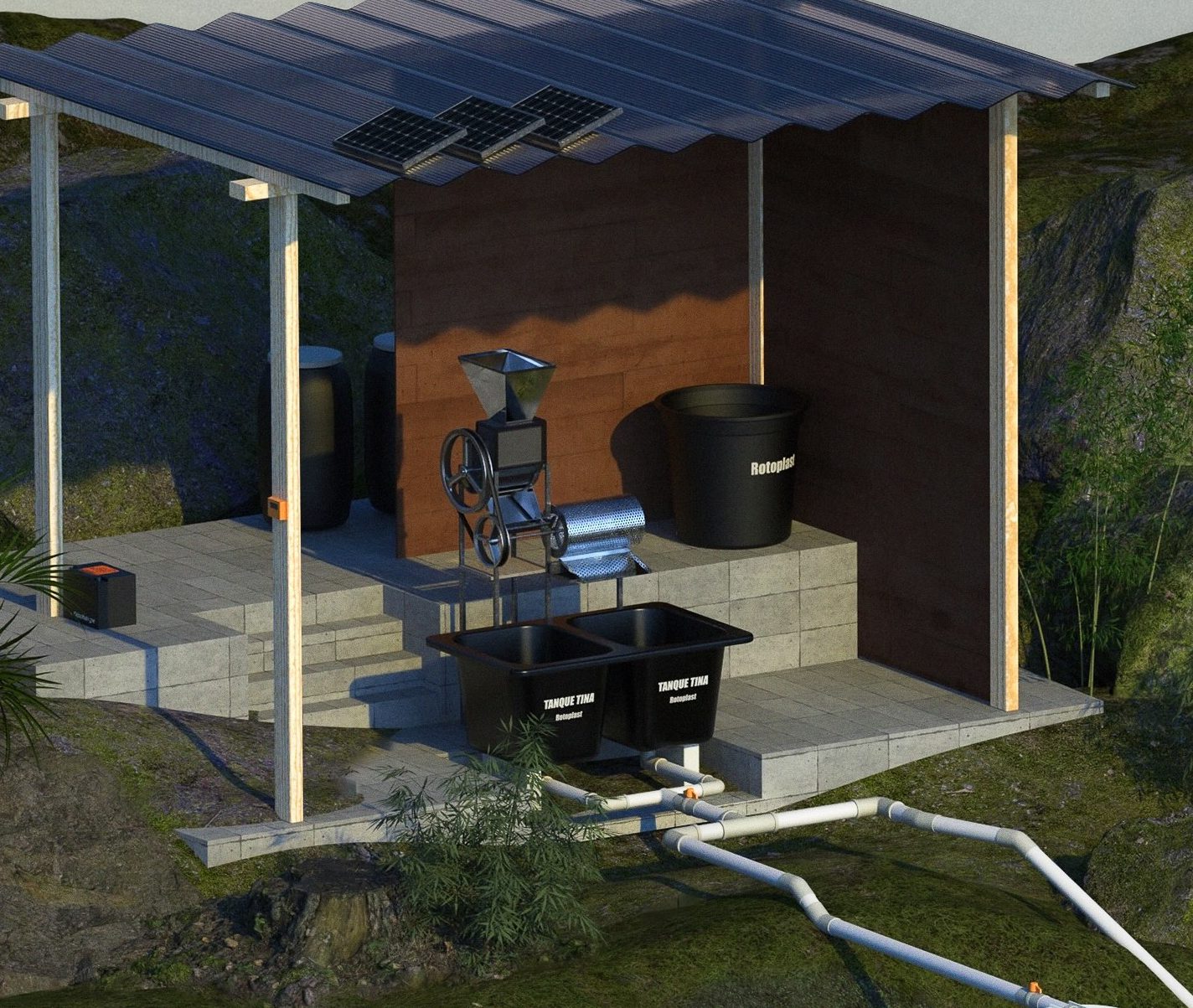
Coffee washing and initial wastewater collection
Coffee is washed at the processing station, generating fermentation wastewater (“honey water”). At small farms, this typically produces 0.5–1 m³ over 2–3 days.
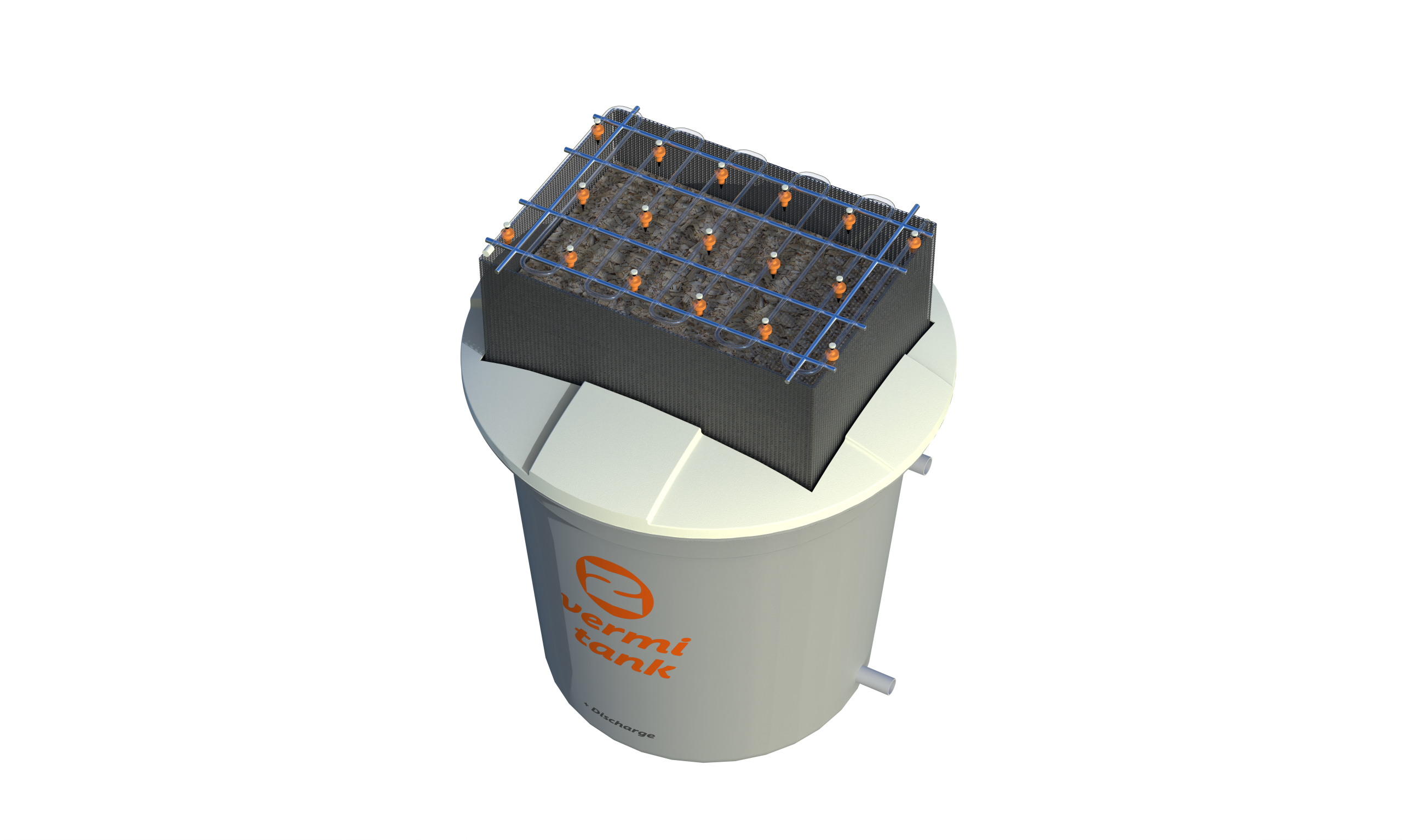
Compost Tank
Primary filtration and pulp composting
The first filter tank captures suspended solids from the wastewater while providing an organic environment for vermi-composting coffee pulp. Earthworms digest solids, improving drainage and preventing blockages.
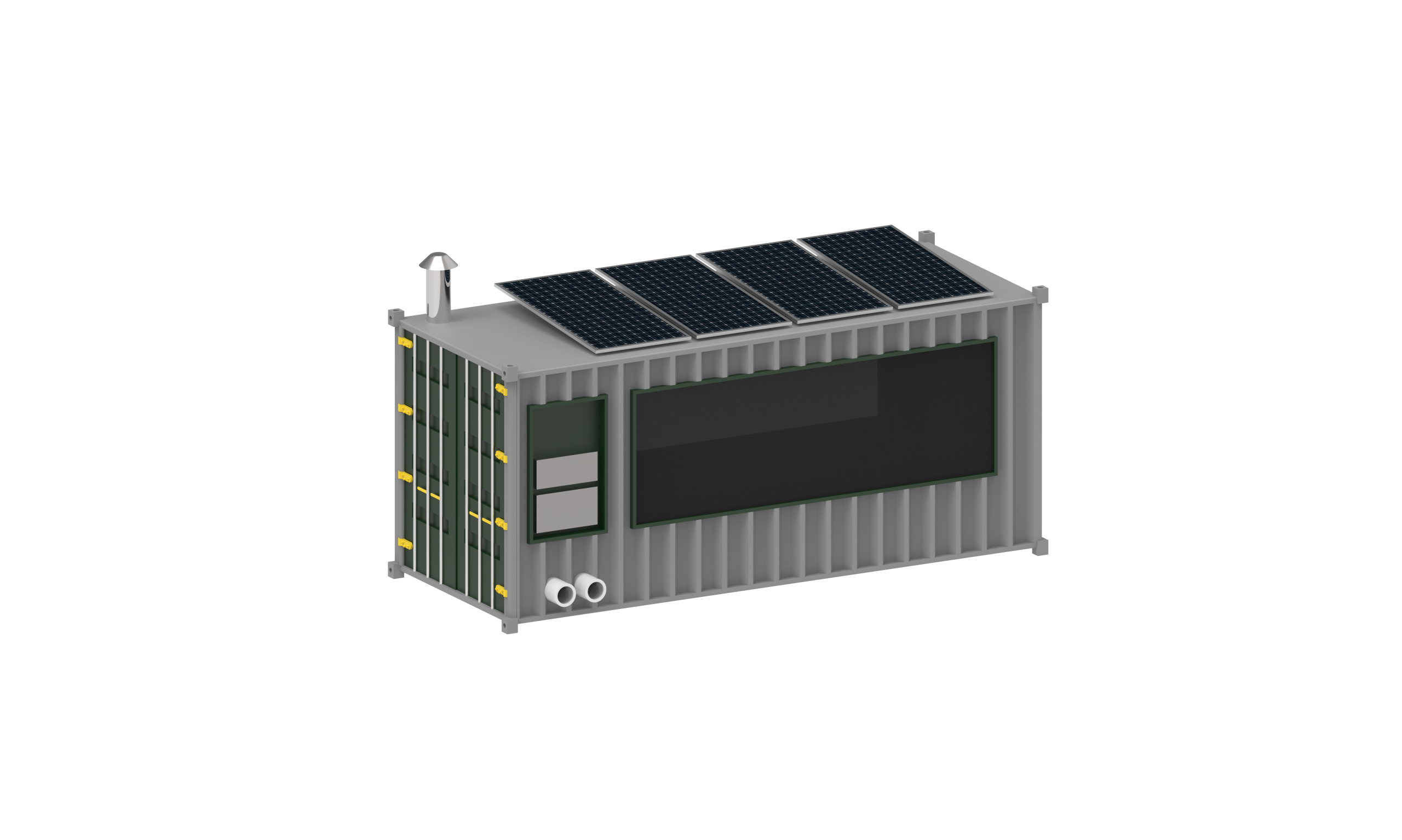
Spray & Circular Tank
Secondary filtration and biological stabilisation
Wastewater is further filtered through a sprayed vermifiltration bed.Effluent is temporarily stored and recirculated, allowing biological processes to stabilise acidity before discharge or reuse.
[ Coffee Processing ]
  (Washing / Fermentation)
          |
          v
[ Screening & Settling ]
 (Primary separation)
          |
          |-------------------------------|
          |                               |
          v                               v
[ Settled Solids & Mucilage ]      [ Clarified Wastewater ]
          |                               |
          v                               v
[ Solid / Compost Tank ]           [ EQ Tank ]
 (Pulp + solids + mucilage)        (Flow & pH buffering)
          |                               |
          v                               v
[ Composting / Vermicomposting ]   [ Biofilter ]
 (Aerobic / worm-assisted)         (Organic load reduction)
          |                               |
          v                               v
[ Soil Amendment ]                 [ Vermi Filter ]
 (Returned to farm soil)           (Final polishing)
                                          |
                                          v
                                [ Treated Water ]
                                (Reuse / Infiltration /
                                 Safe discharge)